
The healthcare industry faces increasing complexity and mounting financial pressures, with providers seeking ways to reduce administrative costs and improve cash flow. Recent data shows that some organizations achieve up to 27% cost reduction by embracing revenue cycle management outsourcing.
This guide explores how outsourcing has become a strategic solution for healthcare practices, clinics, and organizations looking to streamline operations and adapt to evolving challenges.
Inside, you will find a comprehensive overview covering what revenue cycle management outsourcing is, its key benefits, challenges, the selection process, best practices, cost structures, and emerging future trends.
Discover actionable insights to optimize your revenue processes, enhance compliance, and drive measurable results for your healthcare business.
Understanding Revenue Cycle Management Outsourcing
Revenue cycle management outsourcing refers to engaging specialized third-party firms to handle all or part of a healthcare organization’s revenue cycle processes. This approach allows providers to leverage external expertise, advanced tools, and proven workflows to streamline financial operations. For a comprehensive foundation on the process, see the Revenue cycle medical billing overview.
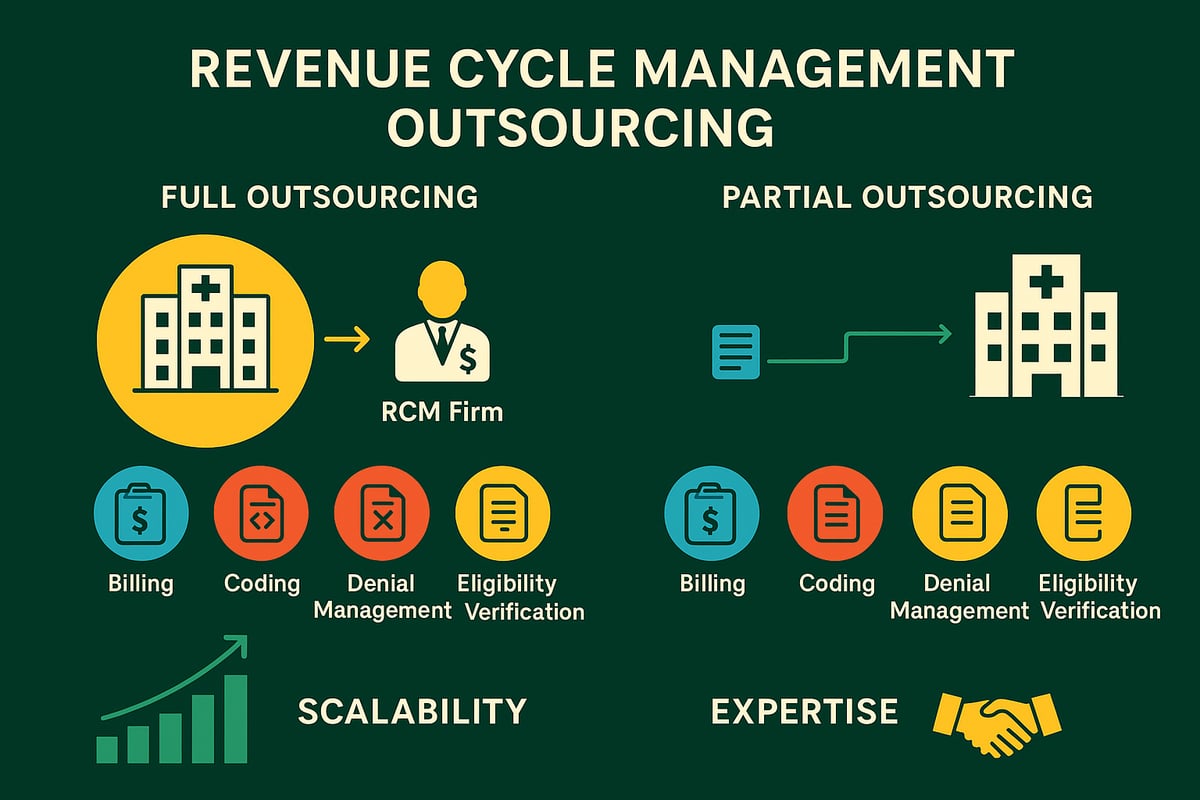
There are two main models for revenue cycle management outsourcing. Full outsourcing hands over the entire revenue cycle, while partial outsourcing focuses on specific tasks like billing, coding, or denial management. Leading RCM service providers typically offer:
- Medical billing and claims submission
- Coding and charge entry
- Denial management and appeals
- Eligibility and benefits verification
- Payment posting and patient statements
The evolution of revenue cycle management outsourcing has been driven by increasing payer rules, regulatory changes, and the need for greater scalability. Hospitals and clinics now partner with RCM firms to optimize cash flow and reduce administrative strain. Adoption rates have risen, especially among medium and large groups seeking specialized staff without hiring internally. Outsourcing grants healthcare organizations access to industry best practices and scalability, enabling them to adapt quickly as regulations and payer demands shift.
Key Benefits of Outsourcing Revenue Cycle Management
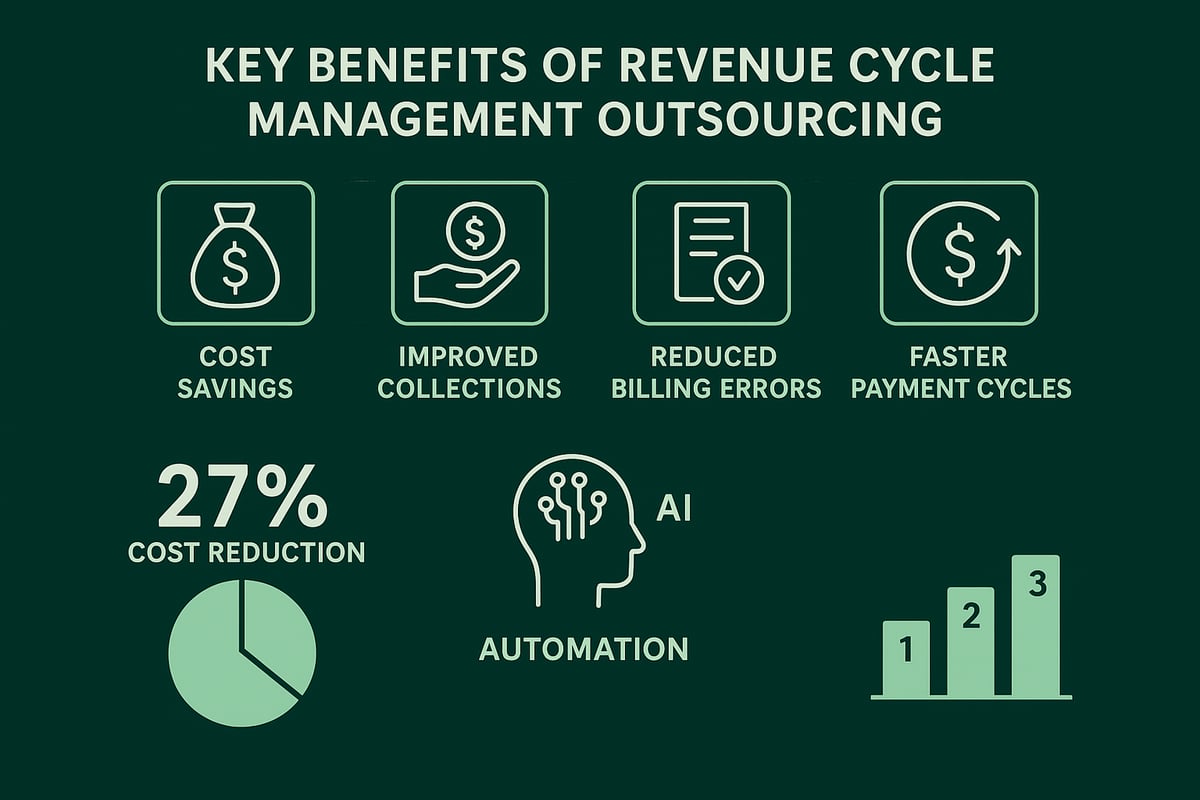
Healthcare organizations are turning to revenue cycle management outsourcing to overcome mounting financial and operational challenges. By partnering with experienced RCM providers, businesses can unlock significant cost savings, streamline collections, and ease administrative burdens.
One of the most compelling benefits is immediate access to expert teams and advanced technology, such as AI and automation. These tools help reduce billing errors and improve claim accuracy, leading to a measurable drop in denials and faster payments. According to recent studies, some health systems have achieved up to a 27% reduction in RCM costs after outsourcing.
Outsourcing also enhances compliance with evolving regulations, as certified professionals stay current with payer requirements and industry best practices. This ensures fewer costly mistakes and mitigates risk for healthcare organizations.
With revenue cycle management outsourcing, internal staff can refocus on patient care rather than paperwork. Providers gain access to skilled resources without expanding headcount, making it easier to adapt to growth or regulatory changes. Improved denial management and quicker payment cycles further strengthen financial health.
For an in-depth look at these advantages, review this comprehensive guide to RCM Outsourcing Benefits.
Revenue cycle management outsourcing has become a strategic solution for healthcare organizations seeking efficiency, compliance, and measurable financial gains.
Challenges and Risks in RCM Outsourcing
Navigating revenue cycle management outsourcing brings notable advantages, but it also introduces several risks that healthcare organizations must address. Common concerns include loss of control over billing processes, data security vulnerabilities, and the potential for HIPAA compliance lapses.
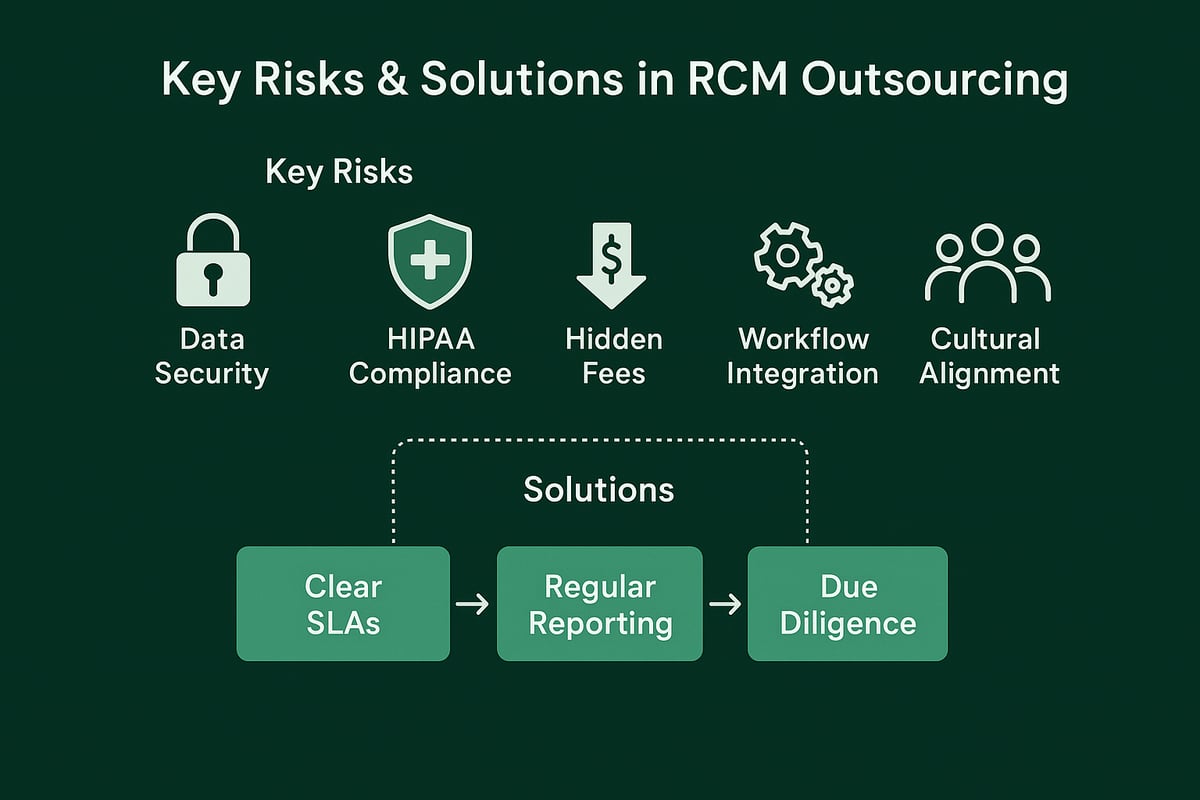
Unclear contract terms and hidden fees can quickly erode anticipated savings. For example, extra charges for handling complex claims or providing additional reports are not uncommon. Integration challenges often arise when outsourced services must connect with existing EHR or practice management systems, leading to workflow disruptions if not managed proactively. Cultural and operational misalignments between providers and vendors can further complicate collaboration.
Delays in accounts receivable for self-pay patients and breakdowns in denial management are frequent pitfalls. To address these, organizations should insist on transparency, set clear expectations, and establish regular performance reviews. Leveraging resources like denial management in medical billing can help strengthen internal controls and minimize revenue loss.
Successful revenue cycle management outsourcing requires robust service-level agreements, ongoing communication, and a commitment to continuous process improvement. Clear protocols, regular reporting, and thorough due diligence are essential to mitigate risks and build a strong, reliable partnership.
How to Select the Right RCM Outsourcing Partner
Choosing the right revenue cycle management outsourcing partner is a pivotal decision for healthcare organizations seeking improved cash flow and operational efficiency. A thoughtful selection process helps ensure your new partner aligns with your business goals, compliance needs, and specialty requirements.
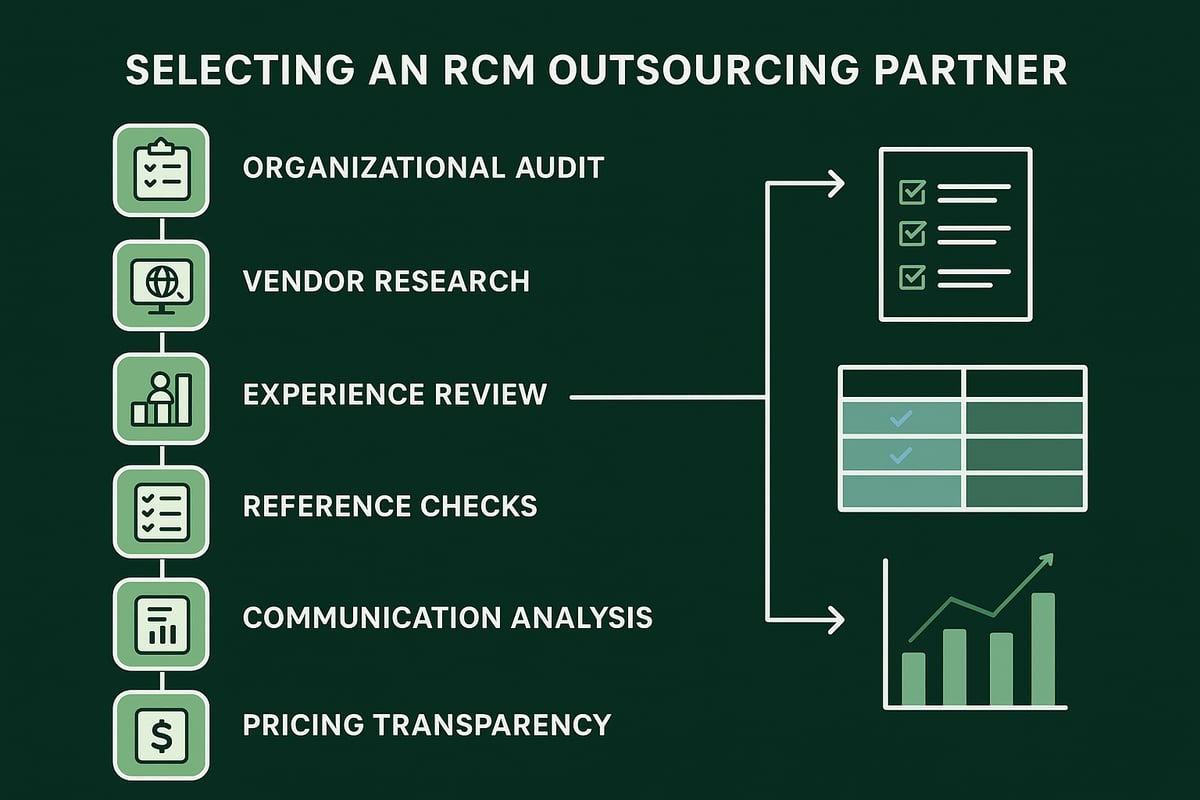
Step-by-Step Selection Process
Start with a thorough audit of current workflows, identifying pain points and revenue cycle gaps. Determine which services to outsource and set clear objectives for your revenue cycle management outsourcing project.
- Research vendors with proven experience in your specialty and a strong reputation in the healthcare industry.
- Shortlist providers based on their service offerings, technology stack, and ability to integrate with your existing systems.
- Evaluate certifications, compliance track records, and the expertise of dedicated account teams.
- Request case studies and client testimonials to validate performance and results.
Key Evaluation Criteria
Assess support structure, responsiveness, and communication channels during the vetting process. Transparent pricing and reporting are essential—insist on detailed breakdowns and clarity around contract terms. Confirm that the partner can scale services up or down as your needs change.
Sample Questions for Vendors
Prepare targeted questions to guide your evaluation, such as:
- How do you ensure HIPAA compliance and data security?
- Can you provide specialty-specific case studies?
- What is your average denial reduction rate?
- How do you handle integration with various EHR systems?
- What service-level agreements (SLAs) do you offer?
Compliance and Industry Standards
Prioritize partners who adhere to industry standards and regulatory requirements. Staying informed on RCM Outsourcing Market Trends can help identify vendors leveraging the latest technology and best practices.
Selecting a revenue cycle management outsourcing provider is not just about cost—it is about building a collaborative partnership that delivers measurable results, compliance, and adaptability. A careful, criteria-driven approach helps ensure long-term success and peace of mind for your organization.
Best Practices for Successful RCM Outsourcing
Achieving lasting success with revenue cycle management outsourcing requires a clear strategy and proactive partnership. Healthcare organizations can maximize value, reduce risk, and drive measurable financial results by following proven best practices.
Establishing Strong Foundations
Start by defining measurable goals, key performance indicators, and clear expectations for your revenue cycle management outsourcing initiative. Collaborate with your partner to ensure seamless integration with existing EHR and practice management systems.
A phased transition—such as beginning with eligibility verification or coding—can reduce disruption and allow teams to adapt gradually. Prioritize robust data security protocols and ongoing compliance checks to protect sensitive patient information.
Regularly review performance benchmarks and maintain open feedback channels to address any challenges as they arise.
Collaboration and Continuous Improvement
Strong communication is essential for successful revenue cycle management outsourcing. Build a collaborative relationship by scheduling routine performance reviews and sharing feedback on both successes and areas for improvement.
Leverage your partner’s expertise and industry knowledge to implement proactive denial management and transparent revenue reporting. Use lessons learned from similar organizations to refine processes and adapt to regulatory changes.
For additional insights on building effective partnerships and staying ahead of industry trends, explore RCM Automation and Outsourcing.
Cost Structures and ROI of RCM Outsourcing
Understanding cost structures is vital when considering revenue cycle management outsourcing. Providers can choose from several pricing models, each with unique benefits for healthcare organizations seeking transparency and efficiency.
| Pricing Model | Description | Best For |
|---|---|---|
| Percentage-based | Fee as a percent of collections | High claim volume practices |
| Per-claim | Flat fee per processed claim | Low-volume clinics |
| Hourly | Billed by staff work hours | Short-term projects |
| Fixed-fee | Set monthly/annual cost | Predictable workloads |
| Hybrid | Mix of above models | Custom service needs |
Several factors influence total costs, including claim volume, service complexity, contract length, and level of support. Medium-sized practices can save up to $47,000 annually by outsourcing compared to in-house teams.
Transparent, performance-based fees align the interests of providers and vendors, reducing financial risk and supporting measurable results. For a detailed analysis of pricing models and cost savings, explore the Medical billing costs and savings resource.
Calculating ROI involves more than direct savings. Improved collections, quicker payments, and reduced administrative overhead all contribute to a stronger bottom line for healthcare organizations.
Future Trends in Revenue Cycle Management Outsourcing
The landscape of revenue cycle management outsourcing is rapidly evolving as healthcare organizations face new financial and regulatory pressures. AI, automation, and advanced analytics are transforming how service providers optimize claims, reduce denials, and streamline billing tasks.
Providers increasingly seek modular, customizable solutions that fit their unique workflows and specialties. With regulatory requirements growing more complex, compliance-focused partners have become essential for mitigating risk and ensuring data security.
The industry is also adapting to value-based care models, requiring RCM vendors to support more sophisticated reimbursement strategies. As a result, market consolidation is expected, with leading firms investing in technology and integrated service offerings.
Recent industry reports highlight robust growth projections driven by cloud solutions and automation. For example, the RCM Market Growth Projections forecast significant expansion as revenue cycle management outsourcing continues to redefine healthcare finance. Staying informed on these trends ensures healthcare organizations remain competitive and prepared for future challenges.
As you look ahead to 2026, navigating the complexities of revenue cycle management can feel overwhelming—especially with changing regulations and mounting financial pressures. If you’re considering outsourcing as a way to streamline operations and boost your practice’s financial health, why not take the next step? We believe that seeing the numbers for yourself is the best place to start. Let us help you identify hidden revenue opportunities and inefficiencies unique to your organization. You can Get Your Free Audit with Greenhive Billing Solutions and gain personalized insights into how expert RCM support can make a measurable difference.

