
Revenue lifecycle management is more vital than ever for B2B organizations facing complex market dynamics and rising customer expectations. Disconnected revenue processes and missed opportunities can hold back growth, making a unified, strategic approach essential for success.
By mastering revenue lifecycle management, businesses can achieve predictable growth, increase operational efficiency, and deliver greater long-term value to their customers. The right strategy aligns teams, streamlines workflows, and uncovers new revenue opportunities.
This guide offers a practical roadmap for optimizing revenue lifecycle management. You will learn fundamental concepts, the business case for RLM, core components, proven frameworks, technology integration, and actionable best practices.
Whether your organization is just starting or looking to future-proof its revenue strategy, this guide will equip you with the tools and insights needed for sustainable growth.
Understanding Revenue Lifecycle Management: Fundamentals & Trends
Mastering revenue lifecycle management is essential for B2B organizations that want to thrive in an evolving marketplace. With increasing complexity across sales, finance, and customer success, a unified approach is now critical to drive predictable growth and operational excellence.
Defining Revenue Lifecycle Management (RLM)
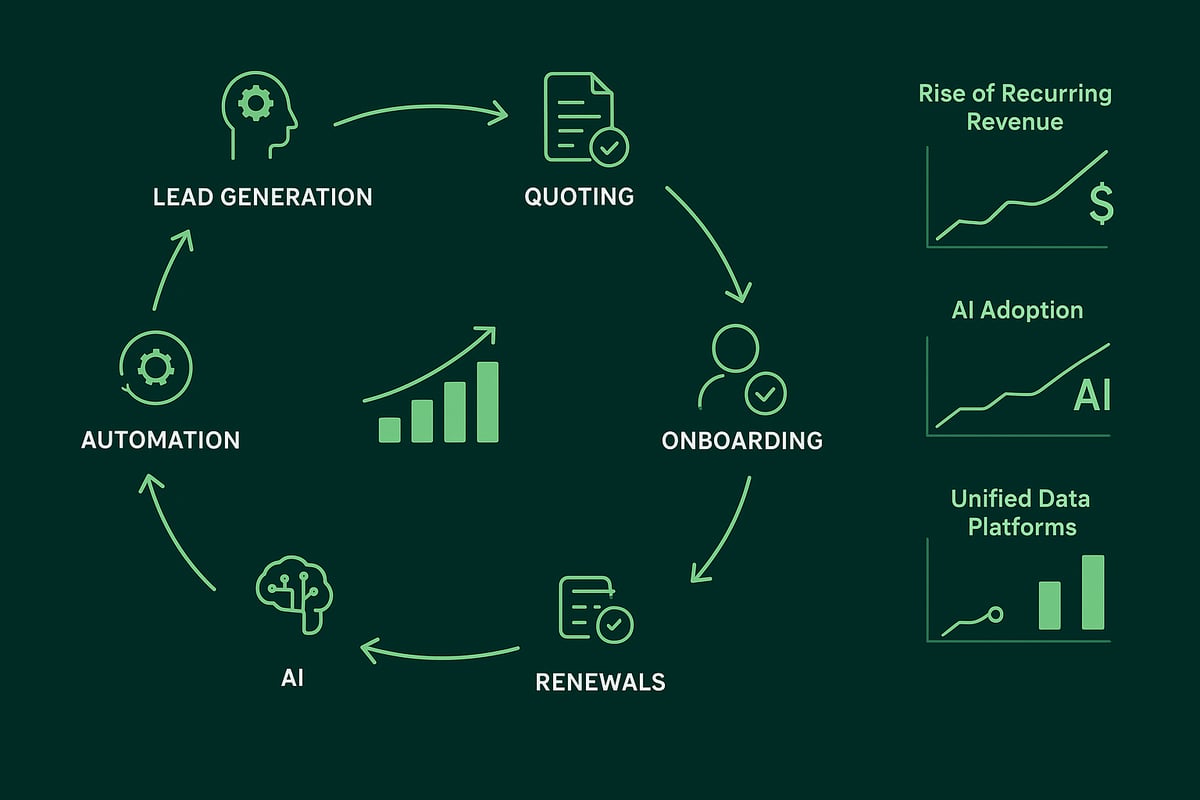
Revenue lifecycle management is a holistic approach that unifies people, processes, and technology to maximize revenue at every point of the customer journey. Unlike traditional revenue cycle management, which focuses mainly on billing and collections, revenue lifecycle management spans the entire customer relationship, from lead generation to renewal and expansion.
In B2B industries such as healthcare, SaaS, and professional services, revenue lifecycle management enables organizations to break down departmental silos. This creates seamless workflows, reduces manual errors, and ensures every team contributes to revenue growth. For example, a healthcare provider can use revenue lifecycle management to coordinate onboarding, claims processing, and follow-up care, ensuring that patient interactions are smooth and financially optimized.
Key terminology includes RLM, CPQ (configure, price, quote), recurring revenue, and revenue optimization. Related concepts such as revenue operations and revenue management platforms are often used interchangeably. The core value lies in aligning sales, finance, operations, and customer success for a shared revenue vision.
The distinction between revenue lifecycle management and traditional models is especially clear in healthcare, where the focus is shifting from isolated billing tasks to integrated revenue strategies. For a deeper look at these differences, see Revenue cycle medical billing explained.
Emerging Trends Shaping RLM
Several trends are rapidly transforming revenue lifecycle management for B2B organizations. Digital transformation is at the forefront, enabling unified revenue processes that connect every stage of the customer journey.
The rise of recurring revenue and subscription models is reshaping how organizations manage growth. Automation, analytics, and AI are increasingly used to streamline quoting, billing, and renewal tasks, improving both speed and accuracy. Data-driven, customer-centric strategies are now essential for identifying upsell and cross-sell opportunities, enhancing personalization, and predicting churn.
Compliance and regulatory requirements, such as HIPAA in healthcare, are also influencing revenue lifecycle management by demanding robust data security and transparency. In SaaS and healthcare, organizations are adopting integrated platforms and advanced analytics to stay ahead of these changes.
By embracing these trends, B2B organizations can ensure their revenue lifecycle management strategies remain agile, competitive, and compliant, setting the foundation for long-term success.
The Business Case: Benefits and Value of Effective Revenue Lifecycle Management
Every B2B healthcare organization faces mounting pressure to grow revenue while keeping operations efficient and compliant. Effective revenue lifecycle management is the cornerstone of achieving these goals. By streamlining the entire revenue process, organizations unlock measurable value at every stage.
Operational & Financial Advantages
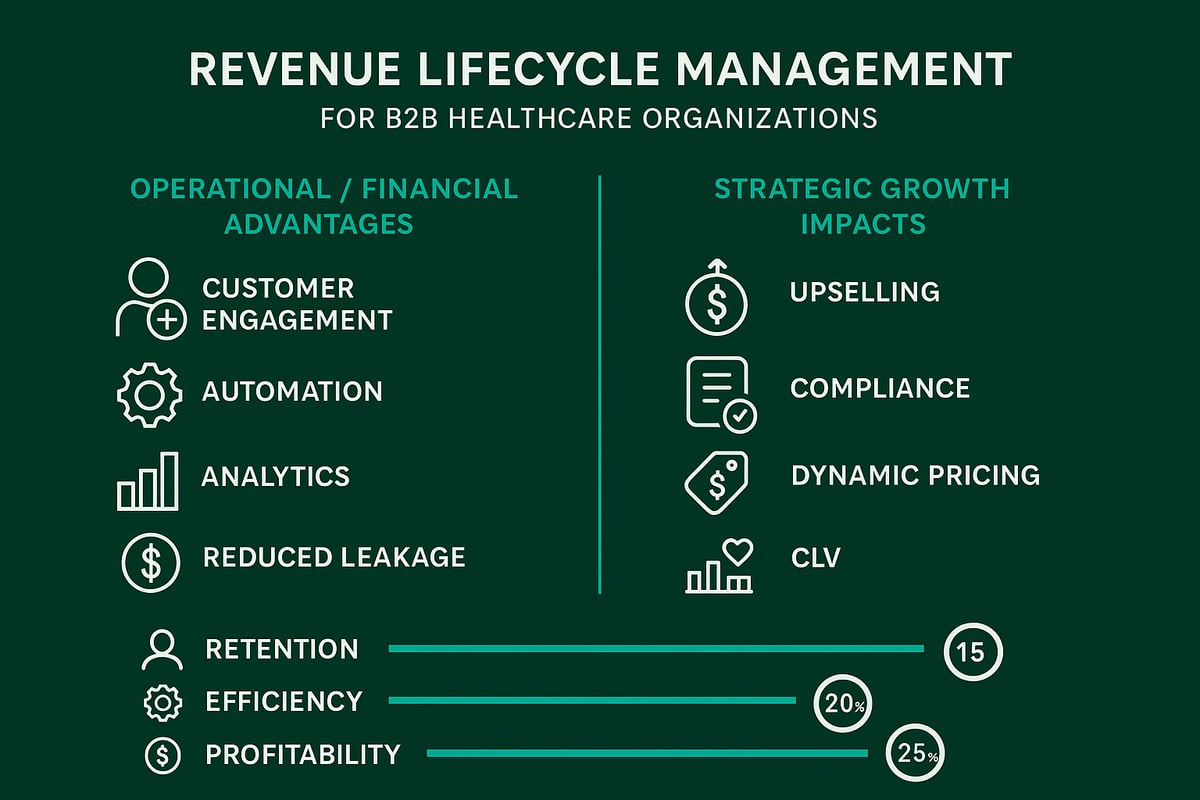
Revenue lifecycle management delivers tangible operational and financial improvements for healthcare providers and related organizations. By unifying processes across teams, customer engagement becomes more consistent and meaningful, resulting in higher satisfaction rates and stronger relationships.
Automation is a cornerstone of revenue lifecycle management. Automating quoting, billing, and renewals minimizes manual errors and saves valuable staff time. This also enhances compliance, as processes are standardized and easier to audit. Integrating data from sales, operations, and finance provides real-time visibility, empowering leaders to make faster and more informed decisions.
Personalization is another key benefit. With unified data, organizations can segment customers, tailor communications, and deliver value at every touchpoint. This leads to improved retention and increased recurring revenue. Consider the impact of better denial management—by leveraging denial management in medical billing, organizations reduce revenue leakage and strengthen profitability.
Operational efficiency grows as teams collaborate seamlessly, allocating resources where they are needed most. Analytics and AI-driven forecasting support scalability, helping organizations adapt as they expand. Statistics consistently show that companies embracing revenue lifecycle management achieve faster sales cycles and higher client retention.
Strategic Impact on Growth
The strategic value of revenue lifecycle management extends far beyond daily operations. Healthcare organizations can support dynamic pricing models, enable upselling and cross-selling, and proactively identify opportunities within existing accounts. This versatility drives sustainable growth and competitive advantage.
Cross-functional alignment strengthens compliance and minimizes risk, especially in highly regulated environments. For example, a SaaS company using integrated revenue lifecycle management achieved dramatic improvements in renewals and upsells by unifying its sales, finance, and client success teams.
Long-term value creation is a hallmark of mature revenue lifecycle management. By focusing on customer lifetime value and building predictable revenue streams, organizations ensure stable financial performance year after year. Proactive use of analytics helps uncover hidden opportunities, while continuous monitoring safeguards against emerging risks.
Ultimately, organizations that invest in revenue lifecycle management not only future-proof their growth but also deliver superior value to clients, partners, and stakeholders.
Core Components of Revenue Lifecycle Management
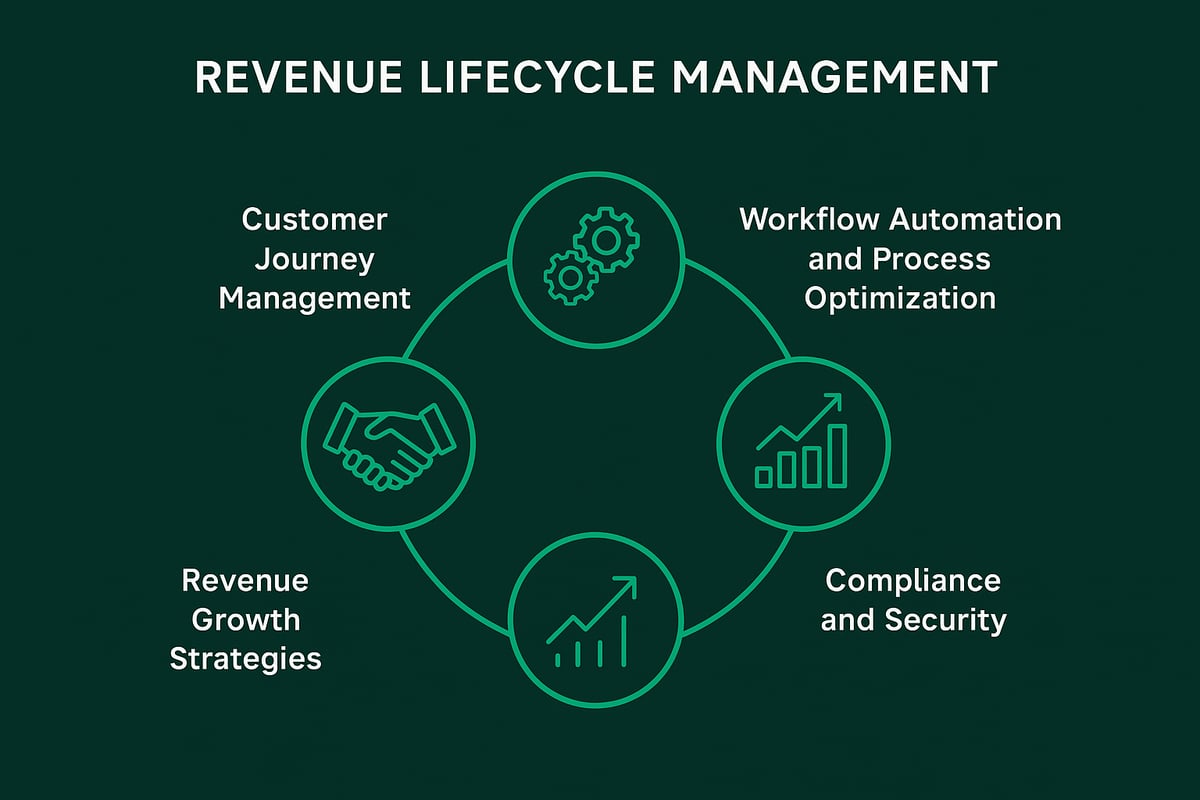
Understanding the core components of revenue lifecycle management is essential for B2B healthcare organizations aiming to maximize financial performance and customer value. Each element plays a strategic role in unifying workflows, improving compliance, and enabling sustainable growth across the entire revenue lifecycle management process.
Customer Journey Management
Customer journey management is the foundation of effective revenue lifecycle management. It involves mapping every stage from initial acquisition to renewal and expansion. By clearly identifying key touchpoints, organizations can deliver consistent and personalized engagement throughout the client relationship.
- Acquisition
- Onboarding
- Ongoing support
- Renewal
- Expansion
Optimizing these touchpoints ensures value delivery at each phase. For example, a healthcare provider can manage the patient lifecycle from onboarding to ongoing care, which leads to higher satisfaction and retention. This approach allows B2B teams to proactively address pain points and anticipate client needs, making revenue lifecycle management more predictable and effective.
Workflow Automation and Process Optimization
Workflow automation is a critical driver of efficiency in revenue lifecycle management. Automating repetitive tasks such as quote generation, contract approvals, billing, and renewals reduces manual errors and supports compliance with industry standards.
- Quote and contract automation
- Streamlined billing cycles
- Automated renewal reminders
Integrating automation with existing CRM, ERP, and billing systems enables seamless data flow and faster revenue cycles. For healthcare organizations, process optimization not only accelerates payment collections but also improves overall client experience. By leveraging skilled professionals and industry-standard tools, B2B teams can scale operations without sacrificing quality or compliance in revenue lifecycle management.
Data Integration and Analytics
Data integration and analytics are at the heart of modern revenue lifecycle management. Unifying data from sales, finance, operations, and customer success provides a single source of truth for all stakeholders. With robust analytics, organizations can forecast revenue, predict churn, and identify new opportunities.
Key benefits include:
- Real-time dashboards for actionable insights
- Enhanced segmentation and personalization
- Improved forecasting and resource allocation
For a deeper dive on leveraging analytics, see Healthcare revenue cycle analytics. This integrated approach supports faster, data-driven decisions, helping B2B healthcare organizations optimize every aspect of revenue lifecycle management for better financial outcomes.
Revenue Growth Strategies
Revenue lifecycle management empowers organizations to implement dynamic revenue growth strategies. By adopting flexible pricing models such as subscriptions or usage-based plans, teams can adapt to evolving market demands.
- Subscription and tiered pricing
- Proactive upsell and cross-sell campaigns
- Revenue leakage monitoring
These strategies enable B2B healthcare organizations to uncover new revenue streams and maximize customer lifetime value. Regular monitoring and refinement of these approaches ensure that revenue lifecycle management continues to drive sustainable, long-term growth.
Compliance and Security (especially in healthcare)
Compliance and security are non-negotiable in revenue lifecycle management, particularly for healthcare organizations. Adhering to regulations like HIPAA requires secure data handling and rigorous privacy protocols.
- Routine audits for regulatory compliance
- Secure storage and transfer of sensitive data
- Ongoing staff training on data privacy
Maintaining compliance while optimizing revenue lifecycle management processes protects both the organization and its clients. By embedding security into all workflows, B2B teams reduce risk and build trust, ensuring financial and reputational stability as regulations evolve.
Step-by-Step Guide: Building a Revenue Lifecycle Management Strategy
Building an effective revenue lifecycle management strategy requires a structured, repeatable approach that aligns people, processes, and technology. The following step-by-step guide outlines how healthcare organizations and B2B providers can optimize every stage, drive growth, and ensure long-term value.
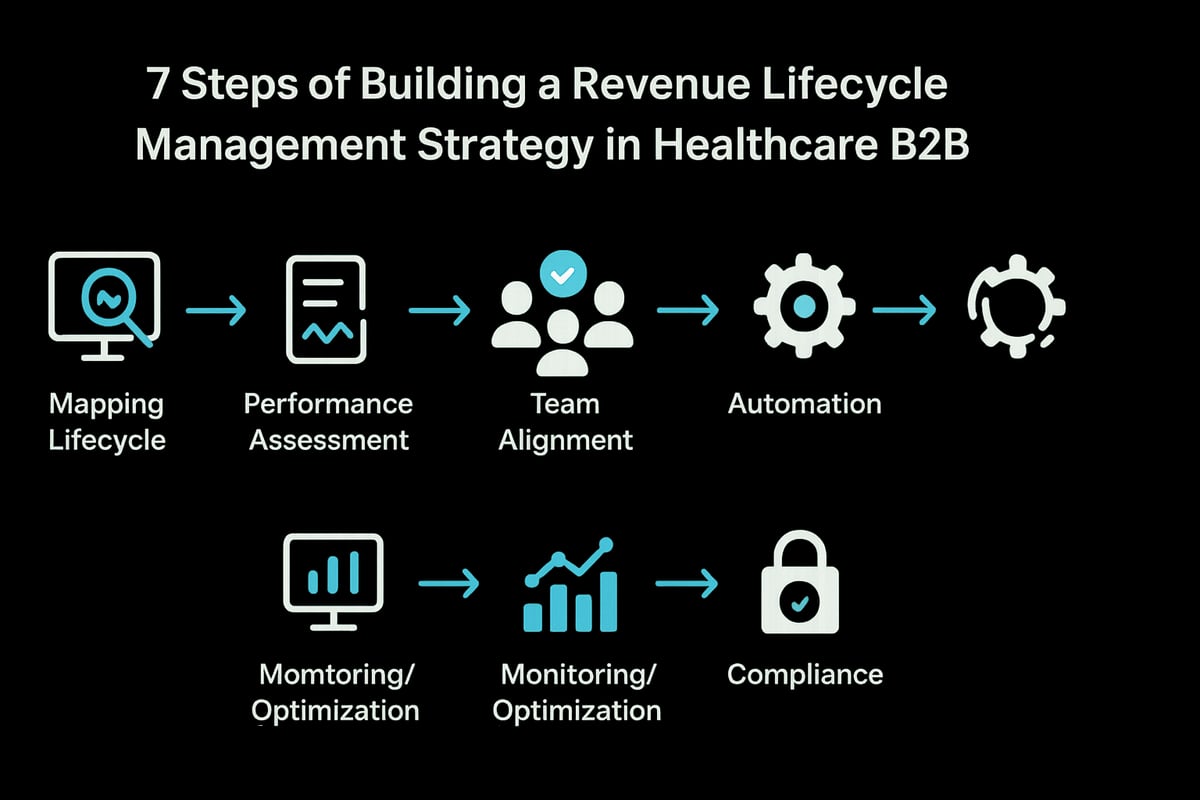
Step 1: Define and Map Revenue Lifecycle Stages
Start by clearly mapping the revenue lifecycle management stages specific to your organization. Common stages include awareness, engagement, purchase, retention, and expansion. For healthcare practices, this might mean charting the patient journey from initial inquiry to ongoing care and follow-up services.
Set measurable goals and key performance indicators (KPIs) for each stage. For example, track lead conversion rates during awareness, average days to payment in the purchase phase, and renewal percentages during retention. This structured mapping provides clarity and sets a foundation for continuous improvement.
A visual journey map can help identify every touchpoint and ensure no critical step is overlooked. By establishing defined stages, you create a shared language for teams and enable more effective revenue lifecycle management.
Step 2: Assess Current Performance and Identify Gaps
Once the lifecycle map is in place, conduct a thorough assessment of current processes and outcomes. Gather data from your CRM, billing systems, and operational workflows to analyze effectiveness at each stage.
Look for bottlenecks such as delayed claims processing, high denial rates, or gaps in communication between sales and finance. Identify silos that may hinder collaboration or cause revenue leakage. Benchmark your performance against industry standards for metrics like days in accounts receivable or claim denial rates.
This gap analysis helps prioritize areas for intervention and sets the stage for targeted improvements. An honest assessment is crucial for effective revenue lifecycle management and sustainable growth.
Step 3: Align Teams and Processes
Revenue lifecycle management thrives on cross-functional alignment. Bring together sales, finance, operations, and customer success teams to establish unified processes and shared goals. Regular cross-departmental meetings ensure everyone is informed and accountable.
Create standardized workflows, such as a unified handoff from sales to billing or a consistent process for handling denied claims. Shared metrics and dashboards foster transparency and drive collaboration. Encourage open communication and provide training to build a culture of continuous improvement.
When teams operate in sync, organizations can deliver a seamless experience to clients and patients, reducing friction and maximizing revenue opportunities.
Step 4: Implement Automation and Integration
Modern revenue lifecycle management relies on automation and seamless data integration. Identify repetitive, manual tasks that can be streamlined, such as quote generation, contract approvals, or claims submission. Automation reduces errors, accelerates processes, and frees up staff for higher-value activities.
Integrate your automation tools with existing CRM, ERP, and billing platforms to ensure data flows smoothly across the organization. For B2B healthcare providers, automating insurance verification or claims tracking can significantly improve operational efficiency.
A connected technology ecosystem supports real-time visibility and enables proactive management of the entire lifecycle. This step lays the groundwork for scalable, efficient revenue lifecycle management.
Step 5: Leverage Data Analytics and AI
Harness the power of data analytics and artificial intelligence to uncover insights and drive decision-making. Use analytics to forecast revenue, segment customers, and predict churn. AI can optimize pricing, identify upsell opportunities, and flag accounts at risk for attrition.
For healthcare organizations, AI-driven analytics can streamline renewals, support dynamic pricing, and enhance patient engagement. The AI adoption in RCM workflows trend demonstrates how automation and advanced analytics are transforming operational efficiency and strategic planning.
By embedding analytics and AI into your revenue lifecycle management strategy, you gain a competitive edge and position your business for future growth.
Step 6: Monitor, Optimize, and Scale
Continuous monitoring is vital for maintaining and improving revenue lifecycle management performance. Set up dashboards to track KPIs in real time and conduct regular reviews to assess process health.
Use feedback loops to gather input from teams and clients, then implement targeted improvements based on this data. As your organization grows, ensure your processes can scale to handle increased volume and complexity without sacrificing efficiency or compliance.
Scalable systems and proactive optimization help you stay agile in a changing market, supporting long-term success.
Step 7: Ensure Compliance and Risk Management
Compliance is non-negotiable in healthcare revenue lifecycle management. Conduct regular audits to ensure adherence to regulations such as HIPAA or GDPR. Implement robust security protocols for handling sensitive financial and patient data.
Document processes, train staff on compliance requirements, and stay updated on regulatory changes. For example, a healthcare RCM provider can maintain compliance while optimizing revenue by integrating secure workflows and monitoring regulatory updates.
Effective risk management not only protects your organization but also builds trust with clients and partners, reinforcing the value of robust revenue lifecycle management.
Technology, Tools, and Partnering for Revenue Lifecycle Success
Technology is the backbone of effective revenue lifecycle management in today’s B2B healthcare environment. The right blend of tools and expert partners can unlock greater visibility, streamline workflows, and support compliance, all while driving sustainable growth.
Technology Landscape Overview
Modern revenue lifecycle management relies on a suite of interconnected technologies. Core systems include customer relationship management (CRM), configure-price-quote (CPQ) tools, automated billing platforms, and advanced analytics engines. Each plays a distinct role in unifying sales, finance, and operations across the entire revenue journey.
When selecting technology, B2B healthcare organizations should prioritize interoperability, security, and scalability. Seamless integration between platforms ensures that data flows freely, reducing duplication and manual errors. AI and machine learning are now essential for predictive analytics, enabling organizations to forecast trends, identify risks, and optimize pricing strategies.
Choosing the right platform is critical. Features such as real-time dashboards, compliance tracking, and robust reporting are non-negotiable for regulated industries. As highlighted in Effective software in revenue lifecycles, using the right technology can significantly impact revenue optimization and agility.
Revenue lifecycle management is most effective when technology empowers teams, rather than adding complexity. Organizations should work with experienced service providers who can adapt to existing client-owned systems and maximize platform value.
Evaluating Service Providers and Partners
Determining whether to manage revenue lifecycle management in-house or partner with a specialized provider is a pivotal decision for B2B healthcare organizations. Outsourcing can offer immediate access to expertise, industry best practices, and scalable resources, particularly valuable in dynamic or highly regulated settings.
Key factors to consider when evaluating partners include:
- Proven expertise in healthcare revenue lifecycle management
- Comprehensive understanding of compliance requirements
- Ability to scale services as business needs evolve
- Transparent communication and real-time reporting capabilities
Collaboration is most successful when partners function as true extensions of the internal team. This ensures knowledge transfer, process alignment, and shared accountability for outcomes. Service providers should demonstrate flexibility in working with client-owned software and existing workflows, ensuring a seamless experience.
For healthcare organizations, partnering with experienced RCM firms can result in faster reimbursements, reduced administrative burdens, and improved financial performance. By leveraging technology and expert support, businesses can achieve higher accuracy and long-term value from their revenue lifecycle management strategy.
Best Practices and Future-Proofing Revenue Lifecycle Management
Adopting best practices in revenue lifecycle management is essential for B2B healthcare organizations seeking long-term growth and resilience. As the industry evolves, maintaining operational excellence and adapting to new challenges ensures your revenue strategies remain robust and effective.
Best Practices for Sustainable RLM
To achieve sustainable results, organizations should focus on these core best practices for revenue lifecycle management:
- Promote collaboration and shared accountability: Align sales, finance, operations, and customer success teams with unified goals and workflows.
- Invest in ongoing staff training: Equip your team with the latest knowledge on compliance, process updates, and industry trends.
- Document and optimize processes: Maintain clear documentation for every stage of the revenue lifecycle, supporting transparency and efficiency.
- Prioritize customer-centricity: Deliver consistent value and personalized experiences at each touchpoint, from onboarding to renewal.
- Embrace data-driven improvement: Leverage analytics to identify bottlenecks, monitor performance, and drive continuous process enhancements.
- Review technology stack and partnerships regularly: Ensure tools and partners support your revenue lifecycle management objectives and integrate seamlessly with your workflows.
- Monitor regulatory changes: Stay current with evolving compliance requirements, updating protocols as needed to mitigate risk.
By consistently applying these best practices, B2B healthcare organizations can optimize revenue lifecycle management and drive measurable business outcomes.
Future-Proofing Strategies
Future-proofing revenue lifecycle management requires organizations to anticipate changes and adapt quickly. Building flexibility into your processes is critical for staying ahead of market trends and evolving client expectations.
Consider these strategies and their benefits:
| Strategy | Benefit |
|---|---|
| Flexible process design | Rapid adjustment to industry shifts |
| Predictive analytics adoption | Proactive decision-making |
| Benchmarking against peers | Informed goal-setting and performance gaps |
| Continuous optimization | Sustained growth and retention |
| AI and automation integration | Increased productivity and reduced errors |
Embracing predictive analytics and AI-driven tools enables organizations to forecast trends, personalize engagement, and identify new opportunities. For example, AI and automation in RCM productivity are transforming how healthcare providers manage billing, compliance, and data accuracy within revenue lifecycle management.
Organizations that continuously refine their revenue lifecycle management processes consistently outperform competitors in both growth and customer retention. By staying informed on best practices and emerging technologies, your business can remain resilient and agile in an ever-changing healthcare landscape.
After exploring the strategies and best practices for successful revenue lifecycle management, you might be wondering how your own processes stack up. If you’re ready to take the next step toward maximizing efficiency, improving collections, and ensuring compliance in your healthcare organization, why not get a clear picture of where you stand? We can help you identify hidden opportunities, streamline workflows, and strengthen your financial performance.
Take the first step toward sustainable revenue growth—Get Your Free Audit today and discover how Greenhive Billing Solutions can make a measurable difference for your practice.

