
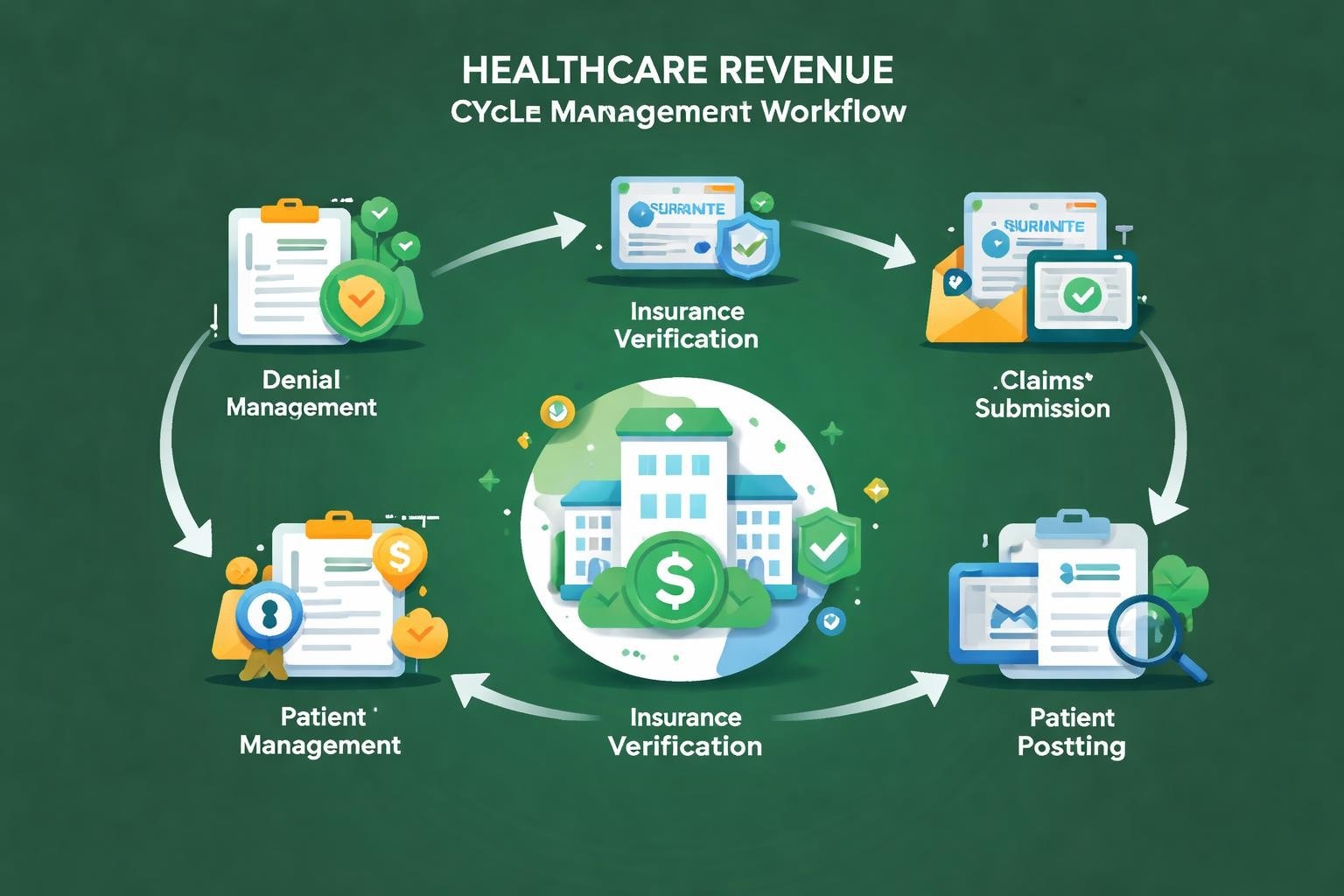
Healthcare providers face mounting pressure to maintain financial health while delivering quality patient care. The complexity of medical billing, insurance verification, and claims processing continues to grow, demanding specialized expertise and significant administrative resources. Many practices discover that managing the revenue cycle internally diverts attention from clinical priorities and strains operational budgets. This reality has led an increasing number of healthcare organizations to explore outsourced RCM as a strategic solution for optimizing financial performance.
Understanding Outsourced RCM and Its Core Functions
Outsourced RCM involves partnering with specialized service providers who manage some or all aspects of the revenue cycle on behalf of healthcare practices. These partnerships allow providers to leverage expert knowledge and proven processes without maintaining large in-house billing departments.
The revenue cycle encompasses every financial interaction from patient scheduling through final payment collection. When healthcare organizations implement outsourced RCM, they gain access to professionals who focus exclusively on billing efficiency, regulatory compliance, and revenue optimization.
Key Components of Revenue Cycle Management
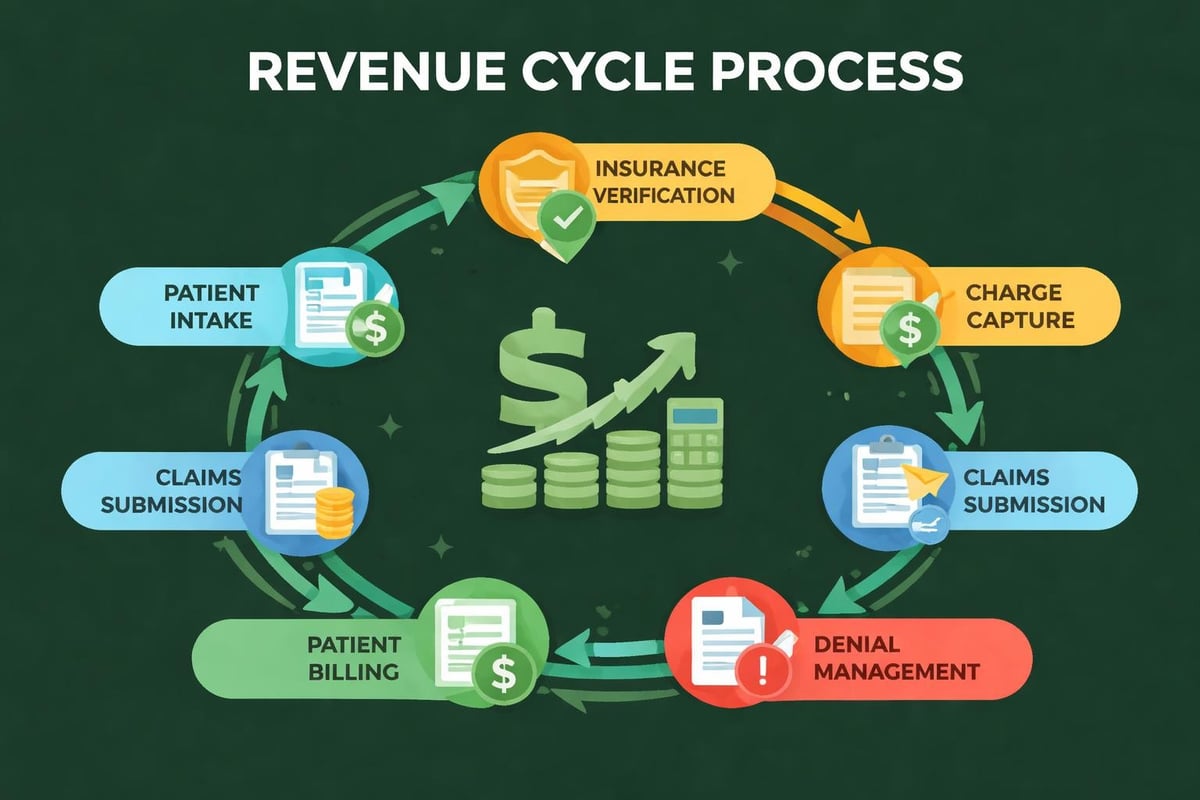
The complete revenue cycle includes multiple interconnected processes:
- Patient registration and insurance verification to confirm coverage before services
- Charge capture and coding to ensure accurate documentation of services rendered
- Claims submission and tracking to expedite payment from insurance companies
- Payment posting and reconciliation to maintain accurate financial records
- Denial management and appeals to recover revenue from rejected claims
- Patient billing and collections to secure payments for balances owed
Each component requires specialized knowledge of payer requirements, coding standards, and compliance regulations. Service providers offering outsourced RCM maintain dedicated teams for each function, ensuring expertise across the entire cycle.
Strategic Benefits of Partnering with RCM Service Providers
Healthcare practices that transition to outsourced RCM typically experience measurable improvements in financial metrics and operational efficiency. Understanding these benefits helps organizations make informed decisions about revenue cycle management.
Financial Performance Improvements
Organizations consistently report enhanced revenue capture when working with specialized billing teams. Expert coders identify appropriate codes for complex procedures, reducing undercoding that leaves money on the table. Similarly, dedicated denial management reduces revenue leakage from rejected claims.
Cost predictability represents another significant advantage. Rather than managing fluctuating payroll expenses for billing staff, practices pay consistent fees based on collections or other agreed-upon metrics. This structure eliminates costs associated with recruitment, training, benefits, and turnover in billing departments.
| Metric | In-House RCM | Outsourced RCM |
|---|---|---|
| First-pass claim acceptance | 75-82% | 92-97% |
| Average collection rate | 85-90% | 94-98% |
| Days in A/R | 45-60 days | 28-38 days |
| Denial rate | 8-12% | 3-6% |
Access to Specialized Expertise
Medical billing regulations and payer requirements change constantly. Internal billing teams struggle to maintain current knowledge across all specialties and insurance carriers. Best practices for outsourcing revenue cycle management emphasize the value of accessing dedicated professionals who monitor regulatory changes full-time.
Specialized service providers invest heavily in ongoing training and certification programs. Their teams develop deep expertise in specific medical specialties, understanding nuanced coding requirements and common denial triggers. This specialization translates directly to improved clean claim rates and faster payment cycles.
Evaluating When Outsourced RCM Makes Strategic Sense
Not every healthcare organization benefits equally from outsourcing revenue cycle functions. Successful partnerships emerge when practices carefully assess their specific circumstances and operational challenges.
Practice Size and Complexity Considerations
Multi-provider practices and specialty clinics often achieve the greatest returns from outsourced RCM arrangements. These organizations typically generate sufficient billing volume to justify partnership fees while dealing with complex coding scenarios that benefit from specialized expertise.
Growing practices face particular challenges maintaining billing efficiency during expansion. Adding providers, locations, or service lines strains existing billing infrastructure. Outsourced RCM scales seamlessly with practice growth, eliminating the need to hire and train additional staff.
However, certain scenarios may not favor outsourcing, particularly for very small practices with limited patient volume. Single-provider practices sometimes maintain adequate billing operations internally, though they must carefully weigh administrative burden against outsourcing costs.
Signs Your Practice Should Consider Outsourcing
- Increasing denial rates that consume staff time with appeals and resubmissions
- Rising days in accounts receivable indicating delayed payment collection
- Staff turnover in billing departments creating knowledge gaps and training costs
- Compliance concerns about staying current with coding and billing regulations
- Limited visibility into revenue cycle metrics and performance indicators

Selecting the Right RCM Service Provider
Choosing an appropriate partner for outsourced RCM requires thorough evaluation of capabilities, experience, and cultural fit. The wrong partnership can disrupt operations and damage patient relationships, while the right match enhances financial performance and operational efficiency.
Essential Evaluation Criteria
Industry experience and specialty knowledge should drive initial screening. Providers must demonstrate proven success with similar practice types and patient populations. Request detailed case studies showing measurable results for comparable organizations.
HIPAA compliance and data security protocols deserve intense scrutiny. Potential data security concerns represent a legitimate consideration when outsourcing revenue cycle functions. Require comprehensive documentation of security measures, including encryption standards, access controls, and breach response procedures.
Technology infrastructure and integration capabilities determine operational efficiency. Effective outsourced RCM requires seamless data exchange with existing practice management and electronic health record systems. Verify that potential partners support your specific software platforms and maintain reliable technical support.
Questions to Ask Prospective Partners
- What percentage of first-pass claims do you achieve for practices in our specialty?
- How do you handle denial management and appeals processes?
- What reporting and analytics do you provide for monitoring performance?
- How quickly can you implement services without disrupting current operations?
- What contractual commitments and exit provisions govern the partnership?
Implementation and Transition Best Practices
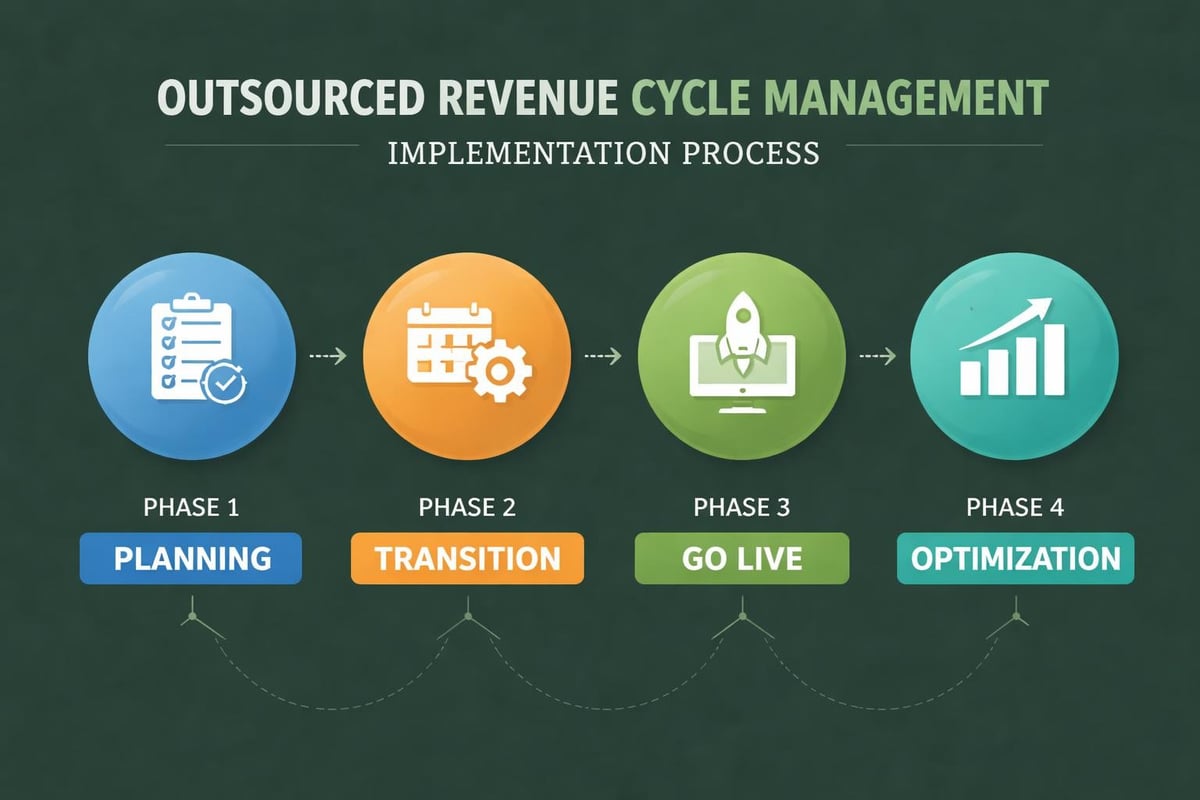
Successfully transitioning to outsourced RCM requires careful planning and systematic execution. Key considerations for revenue cycle outsourcing include detailed implementation planning and clear communication throughout the process.
Structured Implementation Approach
Phase 1: Planning and Preparation (Weeks 1-4)
- Conduct comprehensive current-state assessment of billing operations
- Define detailed performance metrics and success criteria
- Establish communication protocols between practice and service provider
- Document all workflows, fee schedules, and payer contracts
Phase 2: System Integration and Testing (Weeks 5-8)
Configure data interfaces between practice management systems and billing platforms. Test thoroughly with sample claims to verify accurate data transfer and coding. Train practice staff on new workflows for charge entry and documentation requirements.
Phase 3: Parallel Operations (Weeks 9-12)
Run both internal and outsourced billing simultaneously for a defined period. This approach identifies discrepancies and validates that the new process maintains or improves performance levels. Compare clean claim rates, submission timeliness, and patient communication quality.
Phase 4: Full Transition and Optimization (Week 13+)
Complete the handoff of all billing functions to the service provider. Establish regular performance review meetings to monitor key metrics and address emerging issues. Continuously refine workflows based on data insights and operational feedback.
Measuring Success and Optimizing Performance
Effective partnerships for outsourced RCM depend on transparent performance monitoring and continuous improvement. Establishing clear metrics and regular review processes ensures accountability and identifies optimization opportunities.
Critical Performance Indicators
| Metric | Definition | Target Range |
|---|---|---|
| Clean claim rate | Percentage of claims paid on first submission | 95-98% |
| Net collection rate | Total collections divided by allowed charges | 96-99% |
| Average days in A/R | Mean time from service date to payment | 30-35 days |
| Denial rate | Percentage of claims initially denied | 3-5% |
| Cost to collect | Total RCM expenses per dollar collected | $0.03-$0.06 |
Beyond quantitative metrics, qualitative factors matter significantly. Patient satisfaction with billing processes affects overall practice reputation. Monitor complaint rates, payment plan requests, and feedback about billing communications.
Ongoing Optimization Strategies
Monthly performance reviews should examine trends across all key metrics. Investigate sudden changes in denial rates or collection percentages to identify root causes. Work collaboratively with your outsourced RCM partner to implement corrective actions.
Payer-specific analysis reveals patterns that inform negotiation strategies. Track which insurance carriers generate the highest denial rates or longest payment delays. Use this data to address contract terms or submission requirements.
Regular training updates keep practice staff aligned with billing requirements. Even with outsourced RCM, providers and clinical staff must understand documentation standards that support proper coding. Schedule quarterly education sessions covering common issues and new requirements.
Technology Integration and Data Management
Modern outsourced RCM depends on sophisticated technology platforms that automate routine tasks and provide actionable insights. Understanding the technological foundation supports informed decision-making about partnerships.
Essential Technology Components
Revenue cycle service providers utilize comprehensive platforms integrating multiple functions:
- Eligibility verification systems that check insurance coverage in real-time
- Automated coding assistance leveraging artificial intelligence and machine learning
- Claims scrubbing software that identifies errors before submission
- Electronic remittance processing for rapid payment posting
- Advanced analytics dashboards displaying performance across all metrics
These tools require significant investment and ongoing maintenance. Outsourcing provides access to enterprise-grade technology without capital expenditure or management overhead.
Data Security and Compliance Standards
Protected health information security remains paramount when implementing outsourced RCM. Comprehensive revenue cycle management services must maintain strict HIPAA compliance across all operations.
Verify that service providers implement appropriate safeguards:
- Encryption for data at rest and in transit using current security standards
- Multi-factor authentication for all system access
- Regular security audits by independent third parties
- Business associate agreements clearly defining compliance responsibilities
- Incident response protocols for addressing potential breaches
Addressing Common Concerns About Outsourcing
Healthcare practices considering outsourced RCM frequently express concerns about control, quality, and patient experience. Understanding how professional service providers address these issues builds confidence in outsourcing decisions.
Maintaining Practice Control and Oversight
Outsourcing revenue cycle functions does not mean relinquishing oversight. Choosing the right outsourced RCM vendor involves establishing clear governance structures and communication protocols.
Effective partnerships maintain practice control through:
Detailed service level agreements specifying performance standards and reporting requirements. These contracts define expectations for claim submission timeliness, denial management, and patient communication quality.
Regular performance reviews with designated account managers who understand practice priorities. Weekly or monthly meetings examine key metrics, discuss challenges, and coordinate on policy changes or new services.
Access to real-time reporting through secure online portals displaying current accounts receivable, denial trends, and collection activities. Transparency ensures practices maintain visibility into financial performance.
Preserving Patient Relationships
Concerns about patient experience drive many hesitations about outsourced RCM. Practices worry that external billing teams will not provide the personalized service patients expect.
Professional service providers address this through careful training and oversight. Billing staff receive detailed information about each practice’s culture, policies, and patient demographics. Communication templates reflect the practice’s voice and values.
Most importantly, clear delineation of responsibilities ensures patients receive appropriate support. Clinical staff maintain direct patient relationships while billing specialists handle technical insurance questions and payment arrangements.
Financial Models and Cost Structures
Understanding pricing models for outsourced RCM enables accurate cost comparisons and informed budgeting decisions. Service providers typically offer several distinct pricing approaches, each with specific advantages for different practice types.
Common Pricing Structures
Percentage of collections represents the most prevalent model, where fees equal a percentage of actual payments collected. Typical rates range from 4% to 10% depending on practice size, specialty complexity, and service scope. This approach aligns provider incentives with practice financial performance.
| Pricing Model | Typical Range | Best For |
|---|---|---|
| Percentage of collections | 4-10% | Most practices |
| Per-claim fee | $3-$15 | High-volume practices |
| Fixed monthly fee | Varies widely | Predictable volume |
| Hybrid models | Custom | Complex arrangements |
Per-claim pricing charges a flat fee for each claim processed, regardless of payment amount. This model works well for practices with consistent claim values and high volumes. Outsourced billing services can streamline revenue cycle operations while providing cost predictability for certain practice types.
Fixed monthly fees provide maximum budget certainty but require accurate volume projections. Practices experiencing significant growth may quickly outgrow fixed-fee arrangements, triggering mid-contract renegotiations.
Total Cost of Ownership Analysis
Comparing outsourced RCM costs to internal operations requires comprehensive analysis beyond direct billing expenses. Include all relevant costs for accurate comparison:
Internal billing department expenses encompass salaries, benefits, payroll taxes, office space, computers, software licenses, training, and management overhead. Many practices underestimate these total costs when evaluating outsourcing decisions.
Calculate potential revenue improvements from reduced denial rates and faster collections. A practice collecting 88% of allowable charges internally might achieve 96% with specialized billing expertise, generating substantial incremental revenue that offsets outsourcing fees.
Industry-Specific Applications and Considerations
Different healthcare specialties present unique revenue cycle challenges that influence outsourced RCM approaches and outcomes. Understanding specialty-specific factors helps practices set realistic expectations and select appropriate partners.
Specialty Practice Considerations
Primary care practices typically manage high patient volumes with relatively straightforward billing scenarios. Outsourced RCM delivers value through efficiency and scale, processing large claim quantities rapidly while maintaining quality. Focus evaluation on processing speed and patient communication capabilities.
Surgical specialties require sophisticated coding expertise and careful coordination between facility and professional billing. Global surgery packages, multiple procedure reductions, and modifier usage demand specialized knowledge. Prioritize partners demonstrating proven success with surgical billing complexities.
Behavioral health providers navigate unique insurance requirements, session limits, and authorization processes. Streamlining success through outsourcing requires partners understanding mental health parity laws and specialized billing regulations.
Ambulatory Surgery Centers and Hospital-Based Practices
Facility-based providers face distinct challenges requiring specialized RCM expertise. Coordination of benefits between multiple insurance policies, implant billing, and detailed supply tracking add complexity to standard revenue cycle operations.
Hospital-employed physicians often work within organizational constraints affecting vendor selection and implementation timelines. Despite these limitations, many hospital-based practices successfully implement outsourced RCM for professional fee billing while facilities manage institutional claims separately.
Regulatory Compliance and Risk Management
Healthcare billing regulations evolve constantly, creating compliance risks for practices managing revenue cycles internally. Outsourced RCM providers maintain dedicated compliance teams monitoring regulatory changes and updating processes accordingly.
Key Compliance Areas
Coding accuracy prevents fraud allegations and payment recoupments. Office of Inspector General work plans regularly target specific procedure codes, requiring vigilant monitoring and documentation review. Specialized billing teams implement systematic audits ensuring appropriate code selection and modifier usage.
No Surprises Act requirements introduced significant patient disclosure and billing obligations. Service providers updated processes to comply with good faith estimate requirements and independent dispute resolution procedures, protecting practices from violations.
Stark Law and Anti-Kickback considerations affect financial relationships and referral arrangements. While primarily clinical concerns, billing practices can trigger scrutiny if structured improperly. Experienced RCM partners understand these regulations and structure services compliantly.
Audit Support and Documentation
Regular payer audits require comprehensive documentation and rapid response capabilities. Best practices when outsourcing revenue cycle management include establishing clear audit response protocols with service providers.
Professional billing teams coordinate audit responses, gathering requested documentation and preparing detailed explanations of coding rationale. Their experience with audit processes accelerates resolution and minimizes provider disruption.
Successful healthcare practices recognize that financial performance depends on efficient revenue cycle management executed by experienced professionals. Transitioning to outsourced RCM enables providers to focus on clinical excellence while specialized teams optimize billing operations, reduce denials, and accelerate collections. The right partnership delivers measurable improvements in clean claim rates, days in accounts receivable, and overall collection percentages. Greenhive Billing Solutions provides comprehensive revenue cycle management services tailored specifically for healthcare providers, combining deep industry expertise with transparent communication and proven processes that maximize reimbursements while ensuring HIPAA compliance.

